
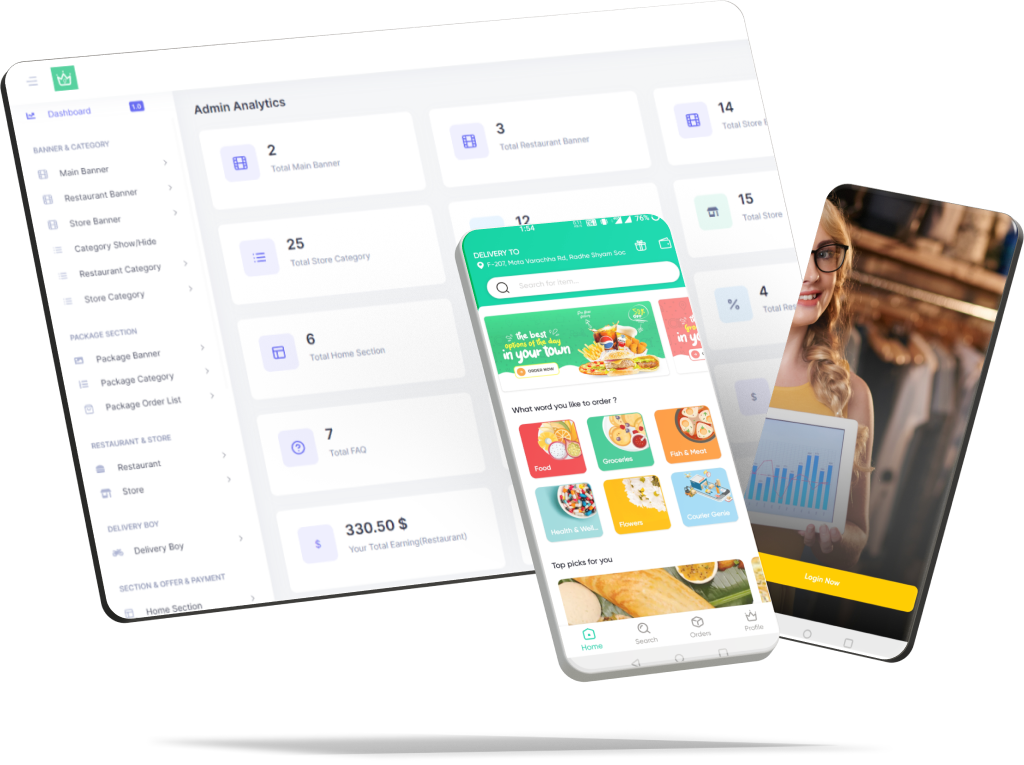
A Gojek clone app is really a super app strategy disguised as one product request. The idea is to put multiple everyday services into one ecosystem so customers keep returning to the same app for different needs.
That can be powerful, but only if the launch is disciplined. A super app should start with one or two core services and expand only when the first layer of demand is proven. If you want to see how the model fits into a broader platform, explore our Gojek clone app development, multi-delivery app, and all-in-one delivery app pages.
What a super app needs
- A single login and wallet experience
- Separate flows for each service category
- A central admin panel for pricing, commissions, and analytics
- Provider apps or dashboards for service partners
- Notifications and retention tools that work across services
How to avoid overbuilding
Many founders try to build a complete ecosystem before they know which service users value most. That is risky. Instead, launch with the service that has the strongest local demand and the most repeat potential. For some markets that is food delivery. For others it may be transport, parcel delivery, or home services.
When a super app makes sense
This model works best when you already understand your market, have a path to customer acquisition, and want to increase retention by offering more than one use case. If you only have one service and no clear expansion path, a focused standalone app is usually the better first move.
The real advantage of a super app is not just convenience. It is lifetime value. Once people trust the app for one job, they are more likely to use it for the next one.


