
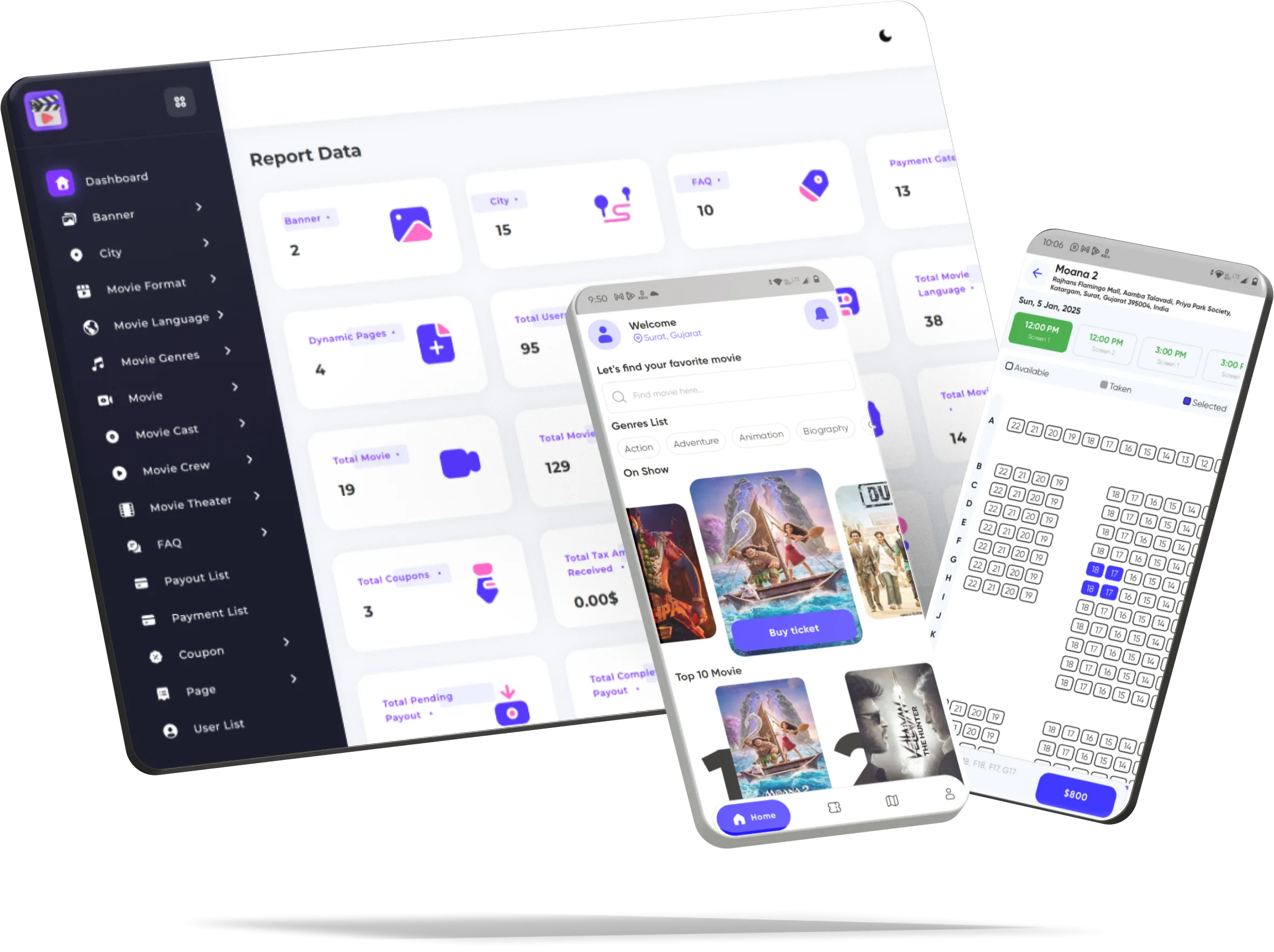
BookMyShow Clone App Development — How to Build a Movie Ticket Booking App in 2026
The on-demand app industry is evolving rapidly in 2026. Entrepreneurs worldwide are searching for the fastest, most cost-effective way to launch competitive apps that can take on established players like Uber, Swiggy, Zomato, GoMechanic, and Blinkit. This comprehensive guide gives you everything you need to understand the market, build your platform, and launch successfully.
Market Overview and Opportunity
The global on-demand economy continues to grow at an exceptional rate. New markets in Africa, Southeast Asia, the Middle East, and Latin America represent billions of potential users who are still in the early stages of adopting mobile-first commerce. In established markets like India, USA, and UAE, entrepreneurs are finding success by serving niche segments, geographic areas, or customer groups that large platforms ignore.
The key insight for 2026 is this: you do not need to beat Uber, Swiggy, or GoMechanic globally. You need to win in your city, your niche, your customer segment. And with white-label technology, you can launch fast enough to capture that opportunity before competitors catch up.
Why Technology Is No Longer the Barrier
Five years ago, building a competitive on-demand app required a team of 15-20 engineers working for 12+ months. Today, white-label solutions like CSCODETECH's 31-product portfolio give entrepreneurs access to production-ready, Flutter-native apps that can launch in 2 business days. The barrier to entry has collapsed — execution and market knowledge are now the real competitive advantages.
Key Features Every Competitive On-Demand App Needs in 2026
- Real-time tracking: Sub-second location updates — anything slower frustrates users
- AI-powered recommendations: Personalized suggestions based on order history, time of day, and location
- Multiple payment gateways: Local payment methods drive 30-40% higher conversion in emerging markets
- Loyalty and rewards: Users with loyalty points order 2.3x more frequently than non-loyalty users
- Dark mode + accessibility: Expected by users in 2026 — not optional
- Multilingual support: Arabic RTL, Hindi, Swahili, Spanish — language is a trust signal
- Subscription model: Monthly passes drive predictable revenue and dramatically increase retention
Revenue Model and How to Reach Profitability
Sustainable on-demand businesses in 2026 are not relying on a single revenue stream. The most successful platforms combine:
- Transaction commission (15-30% per completed order)
- Delivery fee charged to end customers
- Monthly subscription for free delivery or premium features
- Advertising and featured placement for service providers
- Data insights and analytics for enterprise partners
CSCODETECH's Solution: Launch in 2 Days
CSCODETECH offers a production-ready white-label solution that addresses this exact market need. Built with Flutter for native iOS and Android performance, with 12+ payment gateways pre-integrated, multi-language support including Arabic RTL, and lifetime updates included — it is the fastest path from idea to live platform.
Over 2500 entrepreneurs in 50+ countries have launched their on-demand businesses using CSCODETECH's white-label technology. The average time from first contact to live app: 3 business days.
Get your free consultation and live demo today.
Frequently Asked Questions
How much does this type of app cost to build?
White-label solutions start from $5,000-$15,000 for most on-demand app categories. Custom development ranges from $40,000 to $200,000+ depending on complexity. Get a precise quote from CSCODETECH by describing your requirements.
Can I launch in multiple countries with one app?
Yes. CSCODETECH's solutions support multi-country deployment with separate admin panels, currencies, payment gateways, and languages per region.
How long does it take to launch with CSCODETECH?
2-3 business days for standard white-label deployment. More complex customizations take 1-2 weeks. Full custom development engagements take 3-6 months.
Dynamic Pricing & Surge Mechanics
Movie tickets have fixed prices (no surge pricing like Uber). Revenue optimization comes from: showing high-demand shows prominently, promotional bundles (movie + snacks), premium seating at higher prices, and loyalty rewards. Dynamic pricing creates customer backlash in entertainment. Instead, focus on volume (more bookings) than margin (higher price). Partner benefits: aggregators get commissions per ticket + data on viewer preferences. Data becomes valuable to theaters and studios for future releases.
Aggregator vs Direct Theater Model
Aggregator model (BookMyShow): integrate multiple theater chains, single platform for users. Advantages: multiple theaters = more inventory, convenience for customers. Disadvantages: theaters protect customer data, slow to add new chains (negotiation), theater chains prefer direct relationships. Direct model: own/partner with single theater chain, exclusive booking. Advantages: better negotiation leverage, stronger partnership. Disadvantages: limited inventory, less convenience. BookMyShow succeeded through aggressive theater expansion and network effects (more theaters = more users = more valuable to theaters). Early subsidies were necessary.
Key Success Factors
Movie booking is distribution business, not technology business. Technology enables, but partnerships drive growth. Negotiate revenue sharing (not fixed commissions) to align incentives. Build community features (reviews, recommendations, watch parties) to increase engagement. Integrate snacks/parking reservations to increase average order value. Offer dynamic discounts for off-peak shows to improve utilization. Technology is commoditized—differentiation comes from content partnerships and user experience.
Lesson Learned: Movie booking isn't a tech story—it's a content and partnership story. Technology is the enabler, but theaters, studios, and users are what drive success. Build partnerships early.


